


Adnova vs Motion: Which One Is a Better Creative Analytics Platform?



.png)
Creative analytics has quietly become the most important lever in Meta ads strategy. After years of audience targeting being the main growth dial, Meta's algorithm now does most of that work, which means the ad creative itself is what separates a profitable account from a struggling one. To win on Meta today, brands need to know exactly which hooks, formats, angles, and messages are driving revenue, and they need to know it fast enough to act.
That's why creative analytics platforms have moved from "nice to have" to "core stack" for serious DTC and ecom teams. Two of the most-discussed names in the category are Adnova and Motion. They both promise to bridge the gap between creative and performance, surface what's working, and help teams ship more winners. But once you look closely, the difference between them, especially on price, is significant.
This guide breaks down both platforms feature-by-feature so you can decide which one actually fits your stack.
What is Adnova?
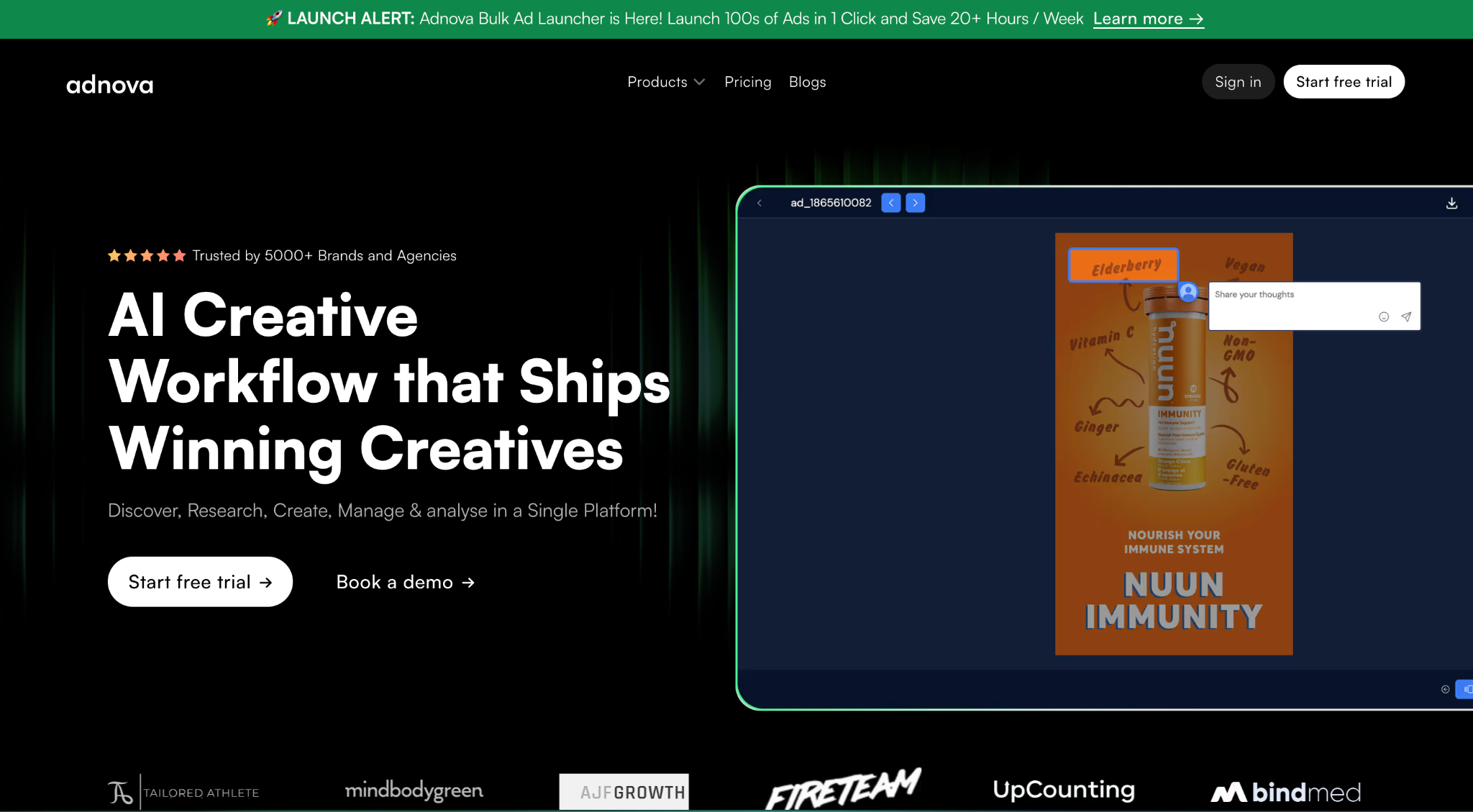
Adnova is an all-in-one creative platform built for DTC brands and performance agencies running paid social. It’s an all-in-one creative workflow that combines Creative Analytics, research, competitor intelligence, asset management, and a Bulk Ad Launcher for Meta. adnova is trusted by 5,000+ brands and agencies and positions itself as a way to replace a stack of separate tools, such as Motion, Foreplay, Frame.io, Kitchn, and others, with one platform.
The pitch is simple: instead of paying for analytics in one tool, swipe files in another, asset review in a third, and a launcher in a fourth, you run the entire creative workflow inside adnova at a single transparent price.
What is Motion?
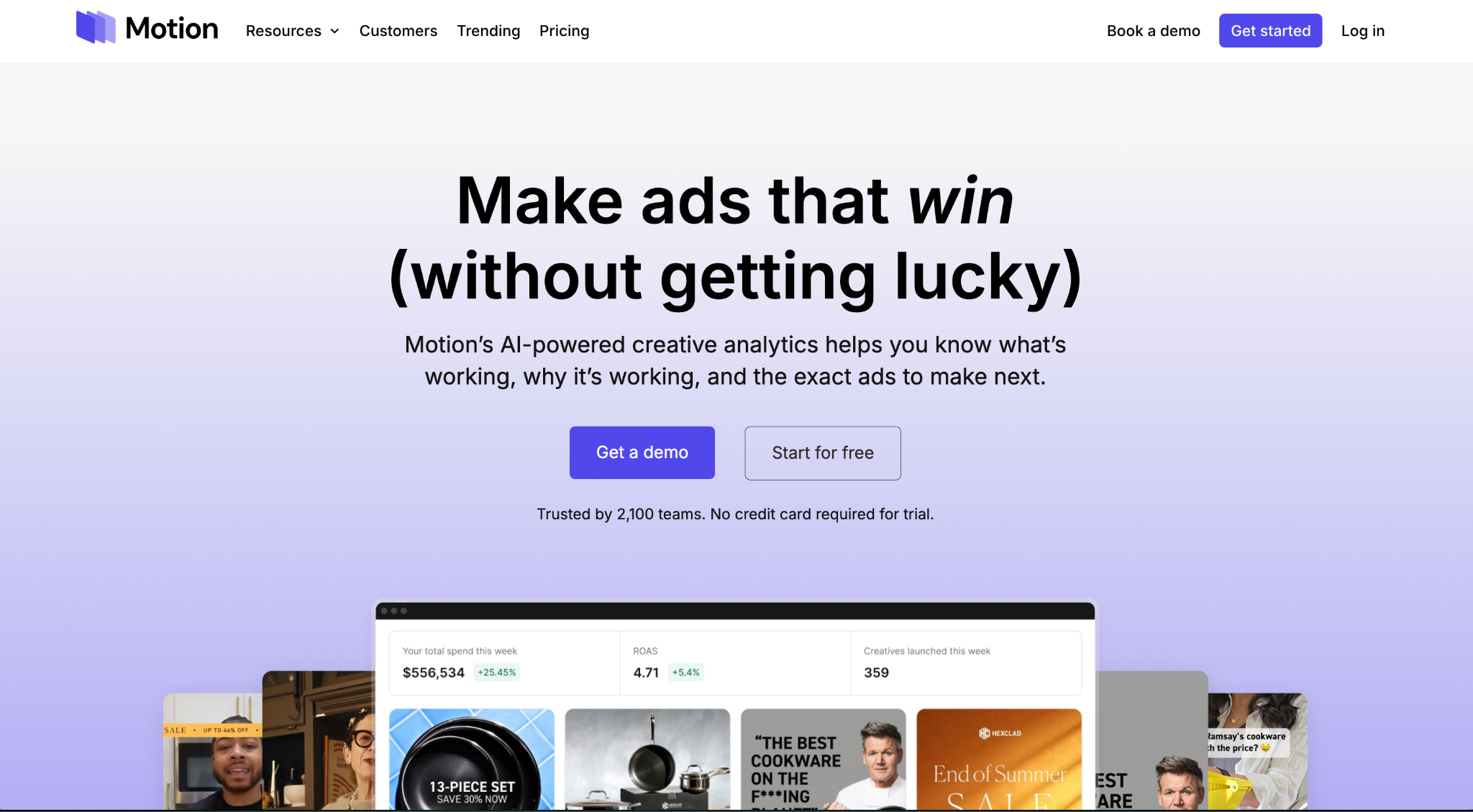
Motion is a creative analytics platform focused on visual-first reporting for paid social. It's used by 2,000+ teams and connects to ad accounts and show creative performance, with AI auto-tagging, leaderboards, and shareable reports. Motion has built a strong brand in the creative strategy community and is well-regarded for its reporting UX.
Motion is purpose-built for the analytics layer. Inspiration and competitor research exist in the product but are lighter, and execution (launching ads) sits outside the platform.
Features and Reports
Both platforms cover the foundational creative analytics jobs that DTC marketers care about:
- Top performing reports to surface winning ads at a glance
- Comparison reports to evaluate creative concepts side by side
- Launch analysis/compass reports to track new ad performance after go-live
- AI-powered auto tagging that classifies creative by theme, format, hook, and visual element so you can spot patterns without manual labeling
- Naming convention support for cleaner filtering and grouping
- Creative insights that connect performance data back to specific creative attributes
- Shareable report snapshots for clients and stakeholders
- Northbeam integration for first-party attribution data, this is critical for DTC brands running iOS-impacted campaigns, where in-platform Meta’s data alone is no longer enough
On the analytics core, adnova and Motion are functionally similar. Both give creative strategists and media buyers the views they need to identify winners, kill losers, and brief the next round of variations. The Northbeam integration matters specifically because attribution gaps on Meta have become one of the biggest blind spots in DTC measurement, and both platforms close that gap.
Data Reliability
Both adnova and Motion are built on official ad platform APIs, and both are widely reviewed as reliable data sources by the teams using them. There is no meaningful gap in data accuracy between the two - if you're choosing between them on this dimension alone, it's a tie.
What does matter for DTC brands is what data is connected. Both platforms support Meta-native data plus Northbeam for first-party attribution, which is the modern standard for e-commerce measurement. As long as your team has clean naming conventions and proper UTM hygiene going in, both products will give you trustworthy outputs.
Shareability
Sharing reports with clients, founders, and creative teams is one of the most common workflows in this category. Both platforms handle it well.
Motion lets you share reports as snapshots, public links to custom report configurations, and offers guest accounts for client viewing.
adnova does the same with sharable report snapshots and adds custom branding (your colors, logo) on every paid plan. For agencies sending reports to clients, the branding layer matters: white-labeled report links feel like part of your service, not a third-party tool.
Team Collaboration
This is where the two products diverge sharply.
Motion offers only three user access levels Admin, Collaborator, and Guest, applied at the account level. That's definitely not enough when you are managing multiple clients, and it flattens out fast.
adnova is built for a multi-tier organization model: org level, workspace level, product level, and role-based access. Each workspace can hold separate brands, products, or clients, with permissions managed independently. For agencies and multi-brand operators, this is a meaningful operational difference. You're not duct-taping access controls together, you're using a permission system actually designed for how your team is structured.
Support Team
Every paid plan in adnova comes with 24/7 support, a dedicated Slack channel, and live chat staffed by humans (not bots). That's not gated behind your account size. Public reviews from operators like Andrew Faris (AJF Growth), Jess Bachman (Fire Team), and Kody Nordquist (Nord Media) consistently call out the speed and helpfulness of the adnova support team by name, which is rare for a SaaS product in this category.
Motion offers in-app chat support across all plans. According to its public pricing page, Dedicated CSM and Private Slack Channel support are available but usually reserved for brands spending over $250K per month on ads. Motion does offer dedicated account management on its larger plans, but priority generally tracks account size, which is worth flagging if you're a smaller brand.
For a DTC brand spending $50K–$200K/month on Meta, which is most of the market - adnova's support model is meaningfully better than what Motion offers at comparable spend levels.
Pricing
This is the headline difference, and it's where the value gap becomes hard to ignore.
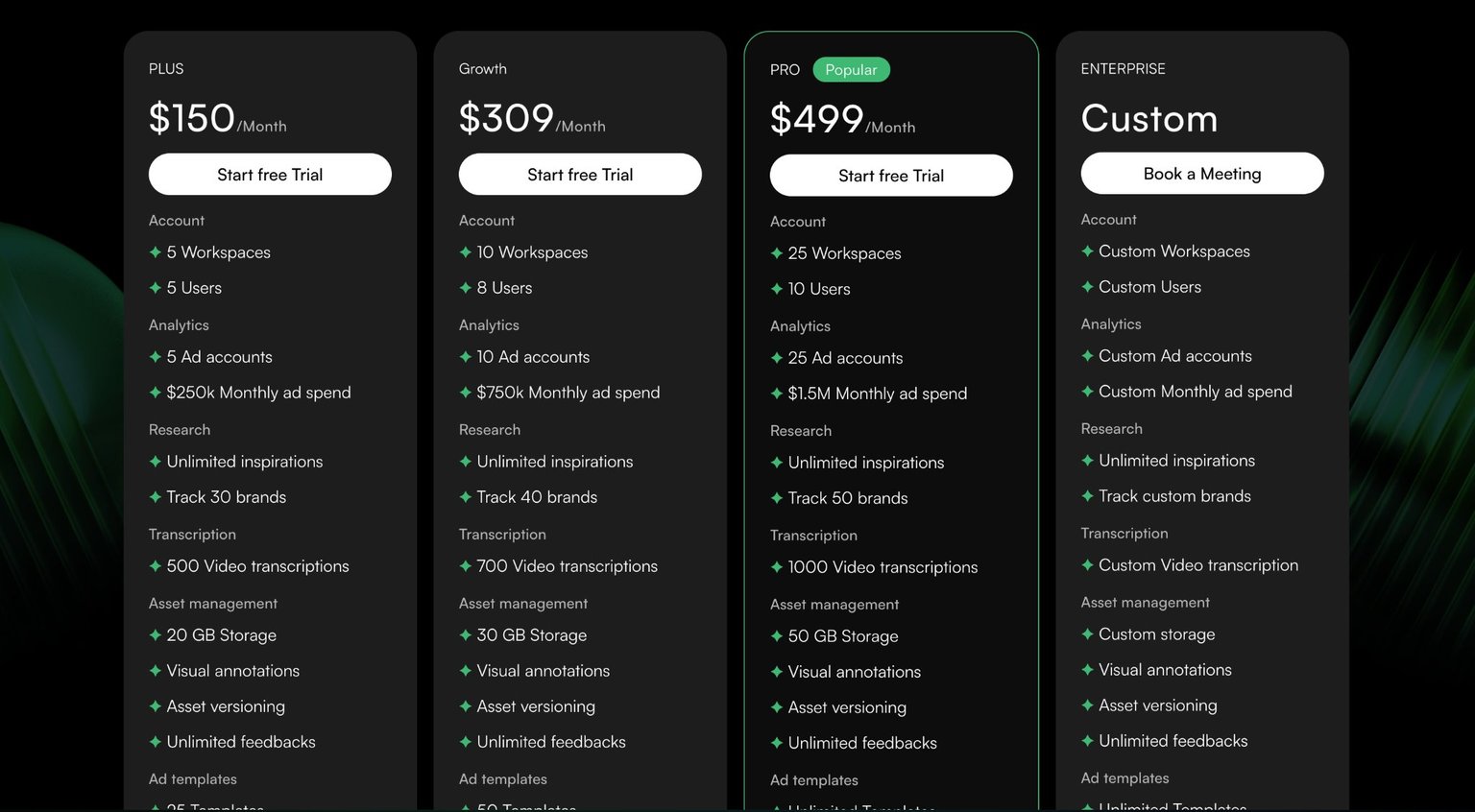
adnova's published pricing:
- It starts at $150/month (or $119/month annual) for up to $250K/month in tracked ad spend, 5 workspaces, 5 users
- Growth: $309/month (or $249/month annual) for up to $750K/month in ad spend, 10 workspaces, 8 users
- Pro: $499/month (or $399/month annual) for up to $1.5M/month in ad spend, 25 workspaces, 10 users
- Enterprise: Custom
Motion's published pricing:
- Starter: $250/month for brands spending up to $50K/month on ad spend
- Pro: Custom pricing (quote-based) for brands spending over $50K/month
- Growth: Custom pricing (quote-based) for brands spending over $250K/month - this is the only tier that includes Northbeam integration, dedicated CSM, and Private Slack support
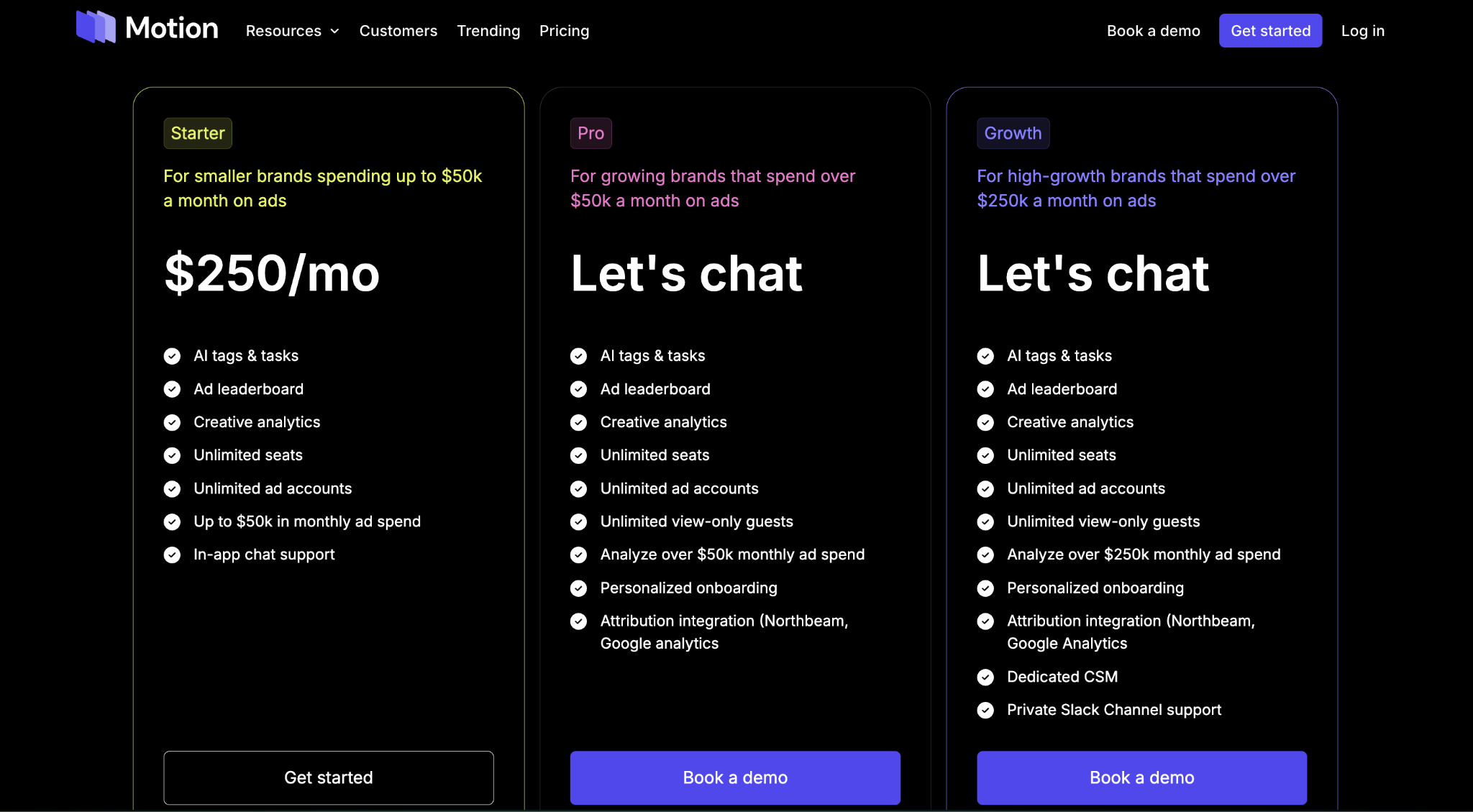
Compare the entry tiers directly. Motion's $250/month Starter plan tracks up to $50K in ad spend. adnova's $150/month Plus plan tracks up to $250K in ad spend - that's 5x the ad spend ceiling. And to get Motion's Northbeam integration, dedicated Slack, and dedicated CSM, you have to be on the Growth tier (custom-priced, quote-only, designed for brands spending over $250K/month). adnova includes the equivalent capabilities on every paid plan starting at $150/month.
Once you do that math across a year, adnova delivers the same set of capabilities at a fraction of the cost - roughly 10x more affordable than Motion.
That's the core argument: not that Motion is bad, but that you're paying premium pricing for features that are now table stakes in this category.
What Should You Choose?
If you're a DTC brand or performance agency evaluating creative analytics today, here's the honest read:
For most DTC marketers, the calculation is simple. You're not paying for capabilities that don't exist elsewhere, you're paying a premium for branding. Adnova gives you the same outcomes (and more), with better support and better team collaboration, at a price that doesn't punish you for spending less.
Try adnova for Yourself
The fastest way to know if adnova is right for your team is to use it on your actual ad accounts.
Start your free adnova trial - no credit card required.
Have questions about migrating from Motion, multi-workspace setup, or whether adnova fits your specific stack? Book a call with our team and we'll walk you through it.