


Adnova Creative Hub vs Frame.io: Which Tool Fits Ad Teams Better?



.png)
Choosing the right creative collaboration and asset management tool is one of those decisions that quietly shapes how fast your team can ship ads. The wrong tool adds friction to every review cycle. The right one disappears into the background and lets your designers, strategists, and clients focus on the work.
Frame.io and Adnova Creative Hub both let teams upload creatives, leave timestamped feedback, and manage versions, but they're built for very different audiences. Frame.io was born inside the world of film and post-production. Adnova Creative Hub was built specifically for advertising teams shipping paid social creatives at scale.
If you're an agency founder or an ecommerce founder trying to decide between them, this side-by-side breakdown should help you pick the one that actually fits your workflow.
What is Adnova Creative Hub?
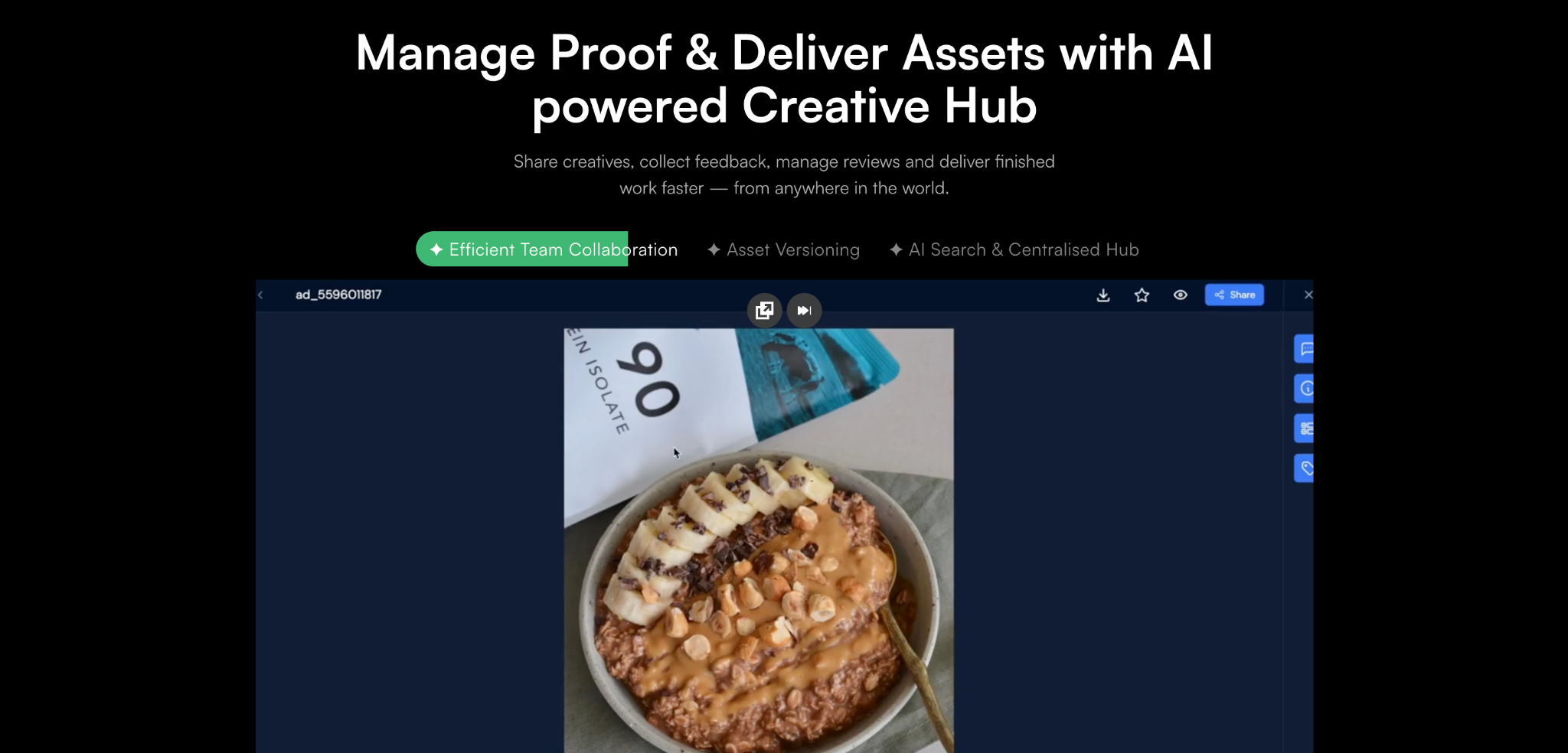
Adnova Creative Hub is the asset management and review product inside Adnova, an all-in-one creative platform built for DTC brands and performance agencies. It's designed to be the central place where your team uploads ad creatives, collects feedback from stakeholders, manages versions, and pushes approved assets directly into campaigns.
What makes Adnova Creative Hub different is the context it lives in. It sits inside the same platform that handles creative analytics, competitor tracking, ad inspiration libraries, and bulk ad launching. So when a creative gets approved in the Hub, you can launch it without exporting, re-uploading, or stitching tools together. Adnova currently powers creative ops for over 5,000 brands and agencies.
What is Frame.io?
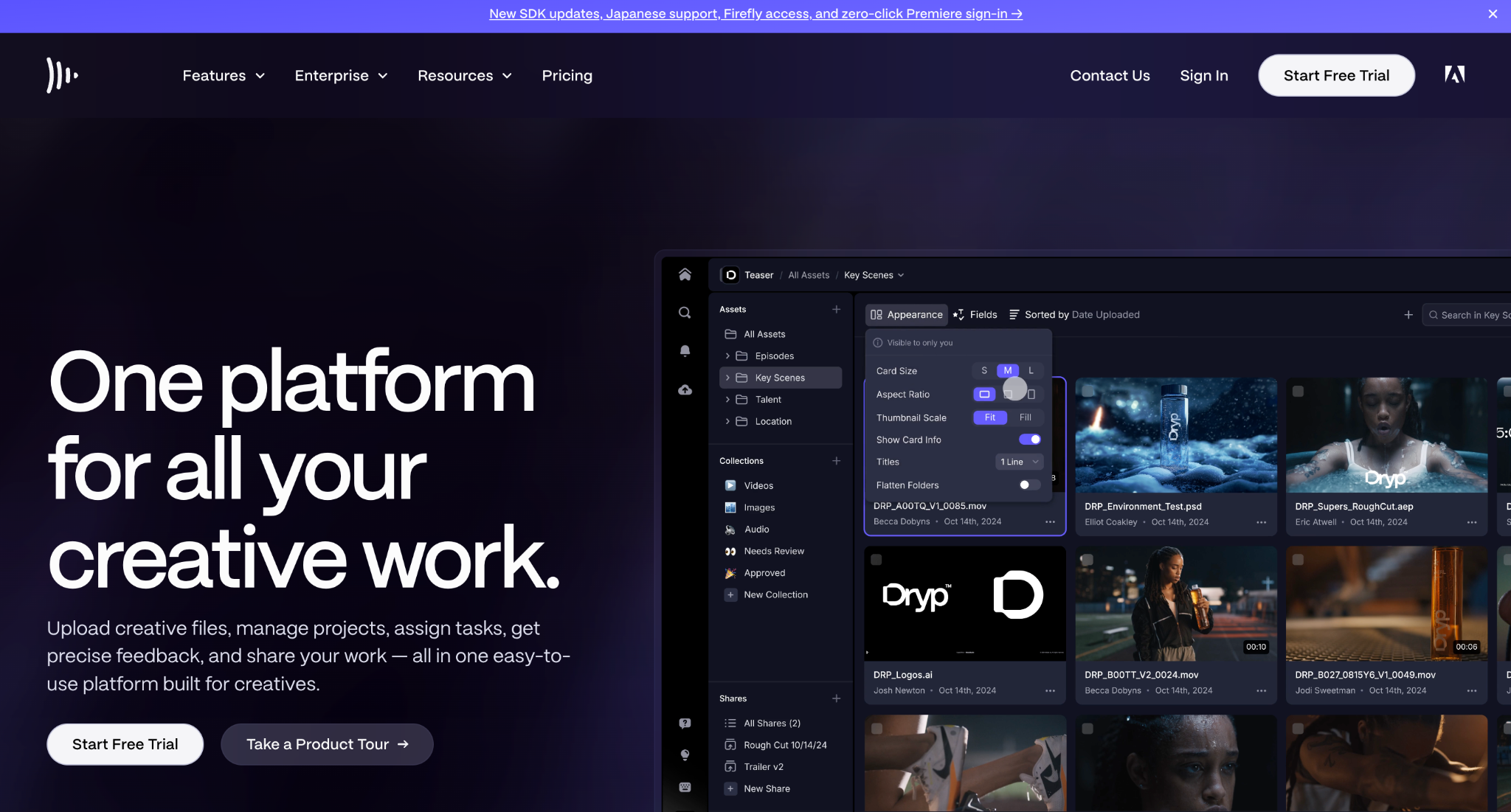
Frame.io is a cloud-based video review and collaboration platform. It became the industry standard for filmmakers, video editors, and post-production teams who needed a clean way to upload videos, leave timestamped notes, and collaborate with clients before delivery.
Frame.io V4, the platform's latest major release, expands beyond video to support images, documents, audio, and Adobe design files. It integrates natively with Premiere Pro, Final Cut Pro, DaVinci Resolve, and Avid Media Composer. It's a beautifully crafted product, but it's worth keeping in mind that its DNA is post-production, not paid advertising.
Review, Feedback, and Version Control
With Adnova Creative Hub, reviewers can leave visual annotations on images and timestamped comments on videos. Designers can resolve those comments, upload a new version, and the previous versions stack neatly under the same creative rather than appearing as separate files with confusing names like "Final_v2_REAL_final.mp4." The whole workflow is purpose-built around the back-and-forth between a strategist, a designer, and a client.
Frame.io supports the same fundamentals, annotations, timestamped comments, and version management. The execution is excellent, but it's designed to serve a much broader audience: feature filmmakers, documentary teams, branded content studios, and creative agencies all at once. That breadth means the UI surfaces tools and options that are essential for a post house but largely irrelevant for an ad team. For advertising-specific workflows like quickly stacking versions of a static carousel or a 15-second UGC ad, Adnova's interface tends to feel more direct and less crowded.
Shareability
Adnova and Frame.io both let you generate shareable links with password protection, expiry dates, granular control over who can comment, and view-only permissions for clients who shouldn't be editing anything. Frame.io's V4 Share Links add a polished presentation layer with custom branding, colors, and layout, which is genuinely nice for client deliveries. Adnova's sharing is more utilitarian but covers everything an agency or ecom team typically needs to send a deck of ad concepts to a stakeholder for sign-off.
Where Adnova pulls ahead is the Collect File link. This is a one-way upload link you can send to an external creator, UGC contributor, or freelance designer that lets them drop raw files directly into your workflow without ever getting access to your boards, your other clients' work, or anything else inside your account. For agencies juggling dozens of UGC creators and e-commerce brands sourcing content from freelancers, this is a meaningful difference. Frame.io doesn't have a native equivalent.
Tracking Fields
Tracking the status of every creative through your pipeline, from concept to approved to launched, is the unglamorous backbone of any asset management tool.
Adnova Creative Hub lets you create custom fields tailored to how your advertising workflow actually runs. Status fields, concept owners, hooks tested, ad angle, format type, whatever your team tracks, you build it in.
Frame.io V4 ships with 32 out-of-the-box metadata fields and supports custom fields as well. The catch for advertising teams is that the default fields, things like codec, frame rate, audio channels, and shot date, are calibrated for production workflows. They're genuinely useful if you're cutting a documentary; they're noise if you're a performance marketer trying to track which hook variation got approved. You can absolutely customize Frame.io to fit, but you're adapting a production-first system to an advertising use case, where Adnova starts where you need to end up.
Workflow Integration
Adnova Creative Hub is just one product inside Adnova's broader stack. Approved creatives flow directly into your ads manager from the Bulk Ad Launcher, where you can push 100+ ads at once. You can pull inspiration from Adnova's library of millions of ads, track competitor through brand following, analyze performance through Creative Analytics, and review and approve assets in the Hub, all without leaving the platform.
Frame.io integrates beautifully with the Adobe Creative Cloud suite and other post-production tools, which is exactly what you'd expect. But getting an approved ad creative from Frame.io into Meta Ads Manager typically means downloading the file, opening another tool, and uploading again, or wiring up a custom automation through the Frame.io API. For an advertising team running dozens of tests a week, that gap adds up.
Asset Tagging and Retrieval
The real test of any asset management tool is how fast you can find a creative six months after it was uploaded.
Adnova Creative Hub has native tagging built directly into the workflow. You tag a creative when you upload it, filter by tags later, and combine that with custom field filters to surface exactly what you need in seconds.
Frame.io handles tagging through its metadata system. You can absolutely tag assets, but it lives inside the broader metadata framework rather than as a standalone feature. For users who just want to slap a "winner" or "UGC" tag on an asset and find it again later, the extra layer of metadata management can feel like overkill.
Pricing
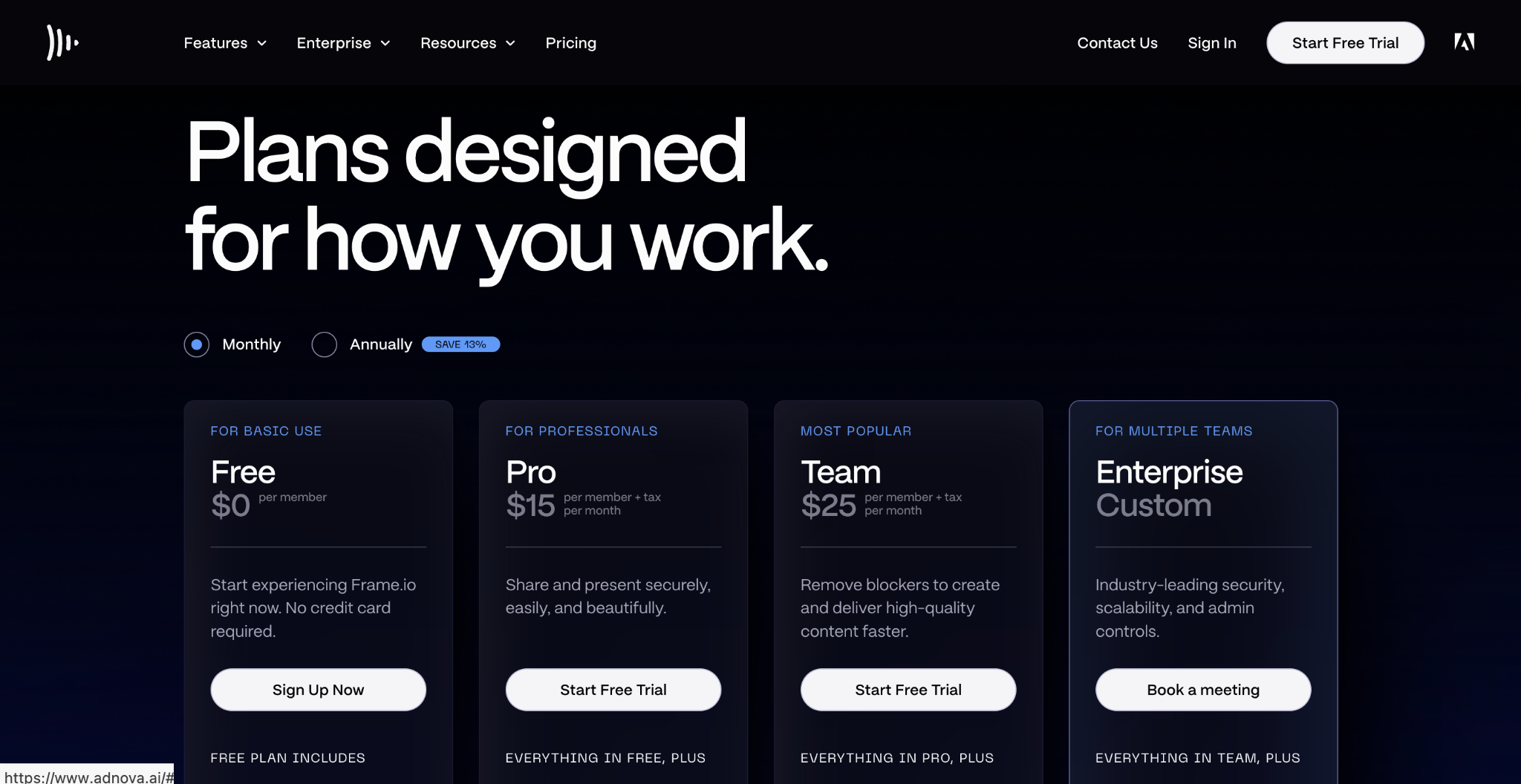
Frame.io's paid plans start at $15/month for the Pro plan, which includes 5 users and 2TB of storage, and $25/month for the Team plan, which scales to 15 users and 3TB. There's also a free tier and a custom-priced Enterprise plan. The pricing is competitive on raw storage, but it's worth remembering you're paying for a tool optimized for video post-production.
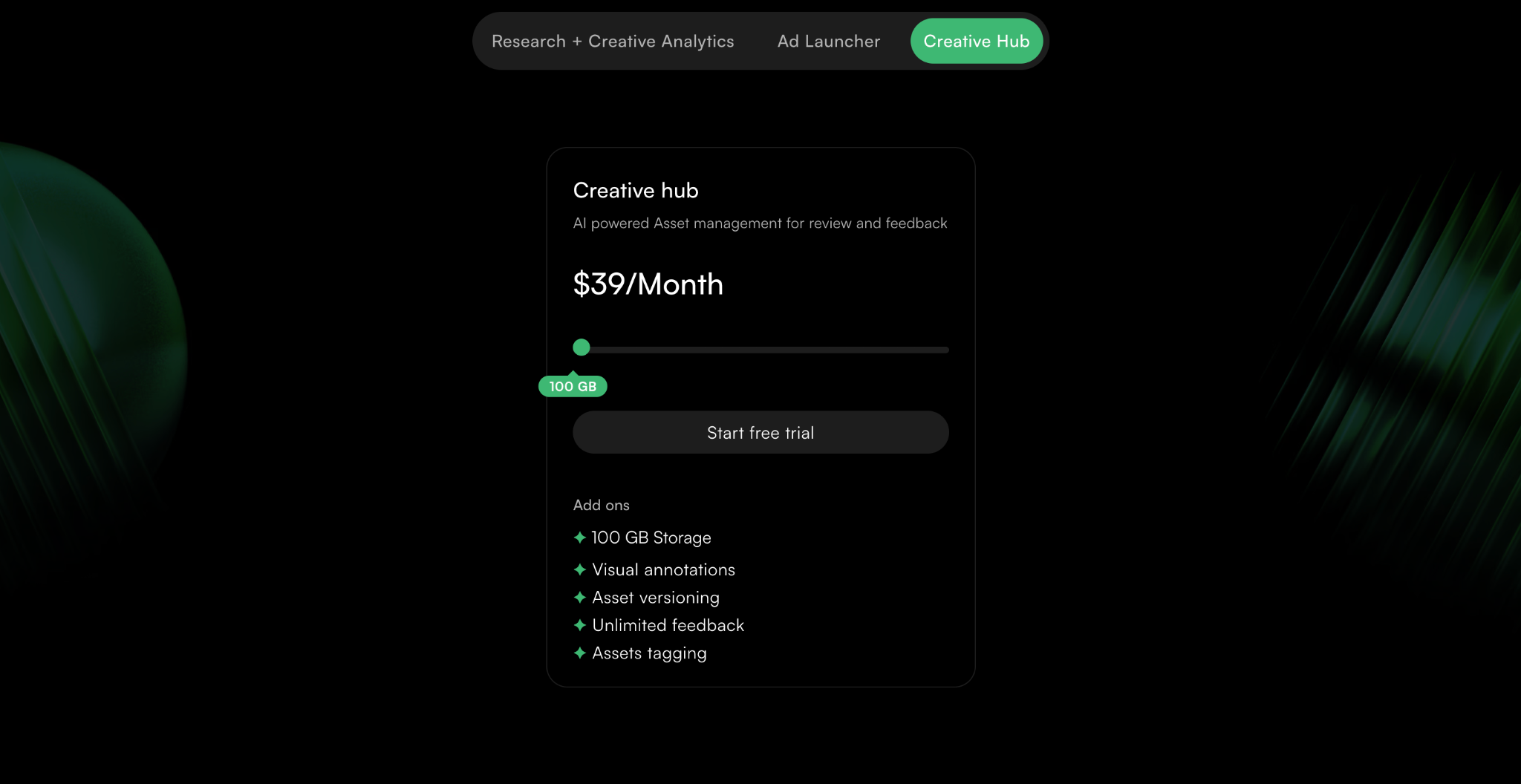
Adnova Creative Hub starts at $39/month for 100GB of storage as a standalone product excluding the other products in the workflow. That price includes visual annotations, asset versioning, unlimited feedback, tagging, transcripts and the workflow integration with the rest of Adnova. If you bundle Creative Hub with creative analytics, competitor research, and the bulk ad launcher, you're replacing what would otherwise be three or four separate subscriptions with one.
On raw storage-per-dollar, Frame.io wins. On total value for an advertising team that needs a connected workflow, Adnova tends to come out ahead once you factor in what you'd otherwise be paying for the analytics, research, and launching tools you'd need alongside Frame.io.
Why Choose Adnova?
Frame.io is a genuinely excellent product. If your primary work is film, episodic content, branded documentaries, or any kind of long-form video post-production, it's the obvious choice and the comparison effectively ends there.
But if you're an agency founder or ecommerce founder whose creative work mostly ends up as paid social ads on Meta and TikTok, you're not really in Frame.io's target market. You're using a tool built for someone else and adapting it to your needs. Adnova Creative Hub was built for exactly your workflow, with annotation and version control that match how ad teams actually review creatives, tagging and custom fields shaped around advertising metadata, and native integration with the rest of the creative ops stack you need anyway.
The choice usually comes down to one question: do you want a best-in-class video review tool, or do you want a creative workflow that takes an ad from inspiration to launch in one platform? For ad agencies and ecom brands, the second option is almost always the better fit.
Ready to see it in action? Sign up for a free trial of Adnova or book a call with the team to walk through how Creative Hub fits into your existing creative ops.